



DNA/RNA Synthesis
RNA synthesis, which is also called DNA transcription, is a highly selective process. Transcription by RNA polymerase II extends beyond RNA synthesis, towards a more active role in mRNA maturation, surveillance and export to the cytoplasm.
Single-strand breaks are repaired by DNA ligase using the complementary strand of the double helix as a template, with DNA ligase creating the final phosphodiester bond to fully repair the DNA.DNA ligases discriminate against substrates containing RNA strands or mismatched base pairs at positions near the ends of the nickedDNA. Bleomycin (BLM) exerts its genotoxicity by generating free radicals, whichattack C-4′ in the deoxyribose backbone of DNA, leading to opening of the ribose ring and strand breakage; it is an S-independentradiomimetic agent that causes double-strand breaks in DNA.
First strand cDNA is synthesized using random hexamer primers and M-MuLV Reverse Transcriptase (RNase H). Second strand cDNA synthesis is subsequently performed using DNA Polymerase I and RNase H. The remaining overhangs are converted into blunt ends using exonuclease/polymerase activity. After adenylation of the 3′ ends of DNA fragments, NEBNext Adaptor with hairpin loop structure is ligated to prepare the samples for hybridization. Cell cycle and DNA replication are the top two pathways regulated by BET bromodomain inhibition. Cycloheximide blocks the translation of mRNA to protein.
DNA/RNA Synthesis Isoform Specific Products
All Product Categories
-
DNA/RNA Synthesis Inhibitors
(1445)
View all products
-
DNA/RNA Synthesis Agonists
(11)
View all products
-
DNA/RNA Synthesis Antagonists
(2)
View all products
-
DNA/RNA Synthesis Activators
(52)
View all products
-
DNA/RNA Synthesis Modulators
(34)
View all products
-
DNA/RNA Synthesis Chemicals
(20)
View all products
-
DNA/RNA Synthesis Inducers
(15)
View all products
-
DNA/RNA Synthesis Degraders
(5)
View all products
-
DNA/RNA Synthesis Controls
(5)
View all products
-
DNA/RNA Synthesis Substrates
(6)
View all products
-
DNA/RNA Synthesis Ligands
(5)
View all products
-
DNA/RNA Synthesis Related Products (2892)
Related Products (2892)

-
Antibodies (248)
-
DNA/RNA Synthesis Isoform Comparison
-
CRT0044876
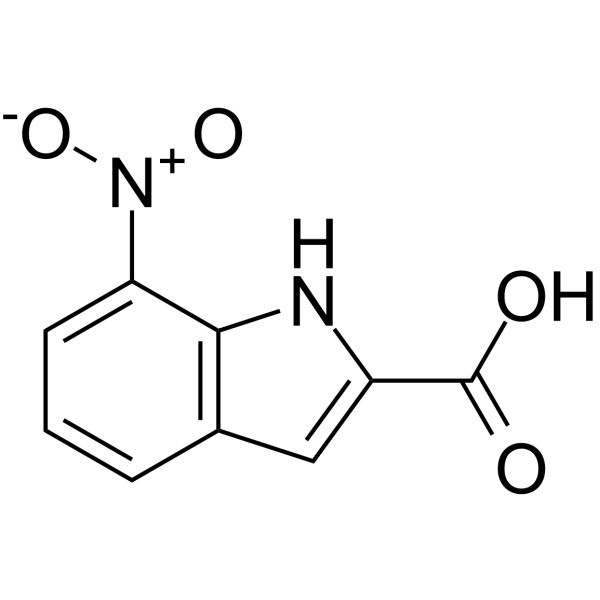 0 ImagesCRT0044876 is a potent and selective apurinic/apyrimidinic endonuclease 1 (APE1) inhibitor (IC50=~3 μM). CRT0044876 inhibits the AP endonuclease, 3′-phosphodiesterase and 3′-phosphatase activities of APE1, and is a specific inhibitor of the exonuclease III family of enzymes to which APE1 belongs. CRT0044876 potentiates the cytotoxicity of several DNA base-targeting compounds.
-
COH29
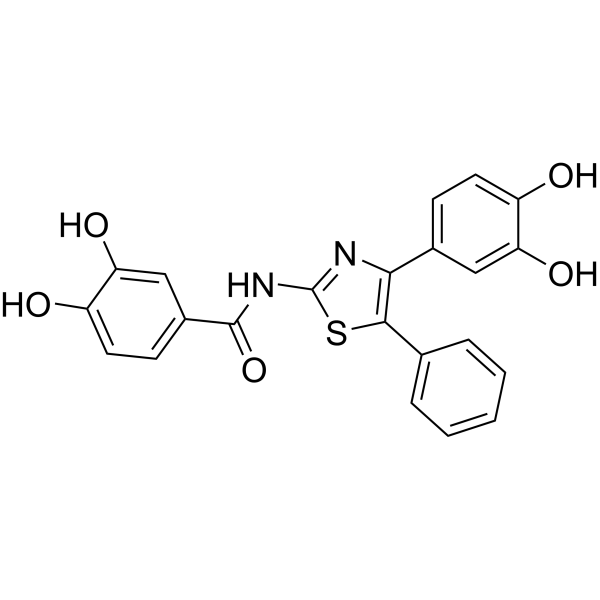 0 ImagesSynonyms: RNR Inhibitor COH29COH29 (RNR Inhibitor COH29) is a potent ribonucleotide reductase (RNR) inhibitor with anticancer activity. COH29 inhibits α and β subunit of RNR with IC50s of 16 μM.
-
RP-6685
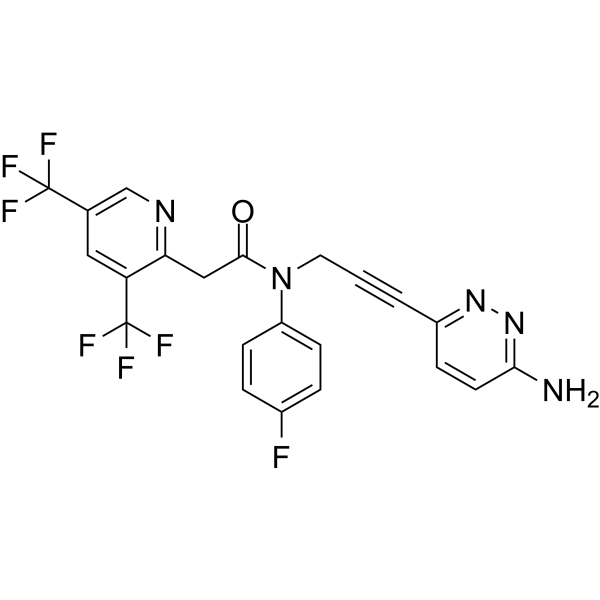 0 ImagesRP-6685 is a potent, selective and orally active DNA polymerase theta (Polθ) inhibitor with an IC50 value of 5.8 nM (PicoGreen assay). RP-6685 shows antitumor efficacy in mouse tumor xenograft model. RP-6685 is a click chemistry reagent, it contains an Alkyne group and can undergo copper-catalyzed azide-alkyne cycloaddition (CuAAc) with molecules containing Azide groups.
-
RNase B, Bovine Pancreas
 0 ImagesCat. No.: HY-129046CSynonyms: Ribonuclease B, Bovine PancreasRNase A (Bovine pancreatic RNase) is a widely used Endonuclease in DNA purification by specifically hydrolyzing cytosine or uracil residues of RNA. RNase A degrades the RNA in the RNA/DNA duplex. RNase A catalyses the breakdown of 3',5'-phosphodiester linkages of single stranded RNA. RNase A family members in organisms are tightly involved in various physiological and pathological processes including cell growth and development, proliferation, differentiation and migration. Dysregulation of RNase A activity or expression level is closely related to pancreatic, ovarian, bladder and thyroid cancer. RNase A has tumor cell-killing ability. RNase B, Bovine Pancreas (Ribonuclease B, Bovine Pancreas) is the N-glycosylated form of RNase A. RNase B, Bovine Pancreas can promote the folding of polypeptide chains and play a role similar to molecular chaperones.
-
Chebulinic acid
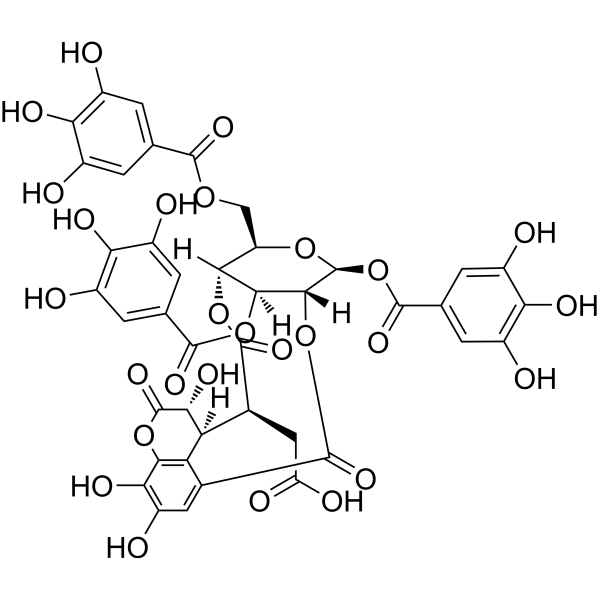 0 ImagesChebulinic acid is a potent natural inhibitor of M. tuberculosis DNA gyrase, also can inhibit SMAD-3 phosphorylation, inhibit H+ K+-ATPase activity.
-
SH514
 0 ImagesSH514 is an orally active IRF4 inhibitor (IC50 = 2.63 μM). SH514 binds to the IRF4-DBD domain, thereby inhibiting the interaction of IRF4 protein with DNA (KD = 1.28 μM). SH514 can inhibit the proliferation of IRF4-high-expressing NCI-H929 and MM.1R cells, and displays no cytotoxicity for normal cells. SH514 significantly downregulates the expression of IRF4 downstream target genes concentration-dependently. SH514 inhibits the expression of cell cycle-related proteins CDC2, Cyclin B1, Cyclin D1, Cyclin E1, and CMYC in Multiple Myeloma cells. SH514 can induce DNA damage and increase the expression of γH2AX. SH514 effectively inhibits the proliferation of multiple myeloma tumors .
-
Foscarnet sodium
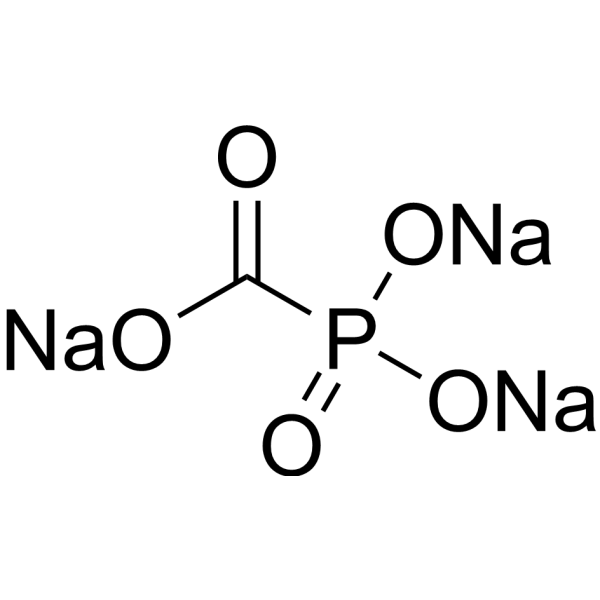 0 ImagesSynonyms: Trisodium phosphonoformate; Phosphonoformic acid trisodium saltFoscarnet sodium (Trisodium phosphonoformate) is a viral DNA polymerase activity inhibitor, leading to reversible suppression of viral replication. Foscarnet sodium is an antiherpesvirus agent used in cytomegalovirus retinitis.
-
YL-5092
 0 ImagesYL-5092 is a selective YT521-B homology (YTH) domain-containing protein 1 (YTHDC1) inhibitor with an IC50 of 7.4 nM and a KD of 29.6 nM. YL-5092 can suppress cancer cell proliferation and induce cell G0/G1 phase arrest and apoptosis. YL-5092 can be used for the research of cancer, such as acute myeloid leukemia (AML).
-
Braco-19
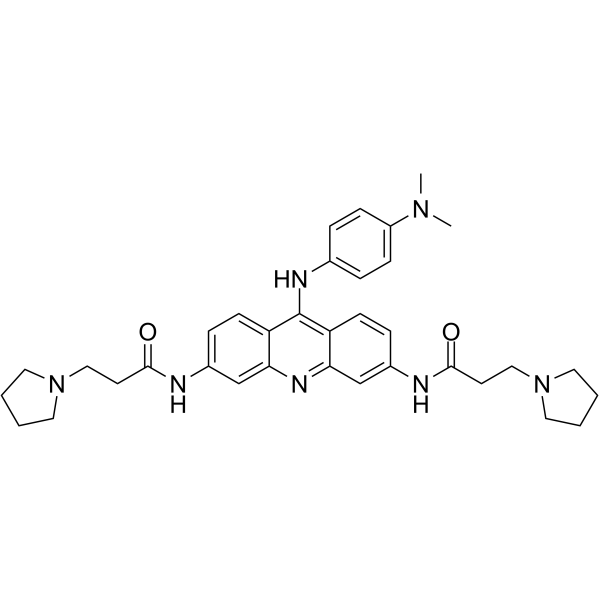 0 ImagesBraco-19 is a potent telomerase/telomere inhibitor, preventing the capping and catalytic action of telomerase. Braco-19 acts as G-quadruplex (GQ) binding ligand, stabilizing G-quadruplexes formation at the 3V telomeric DNA overhang and produce rapid senescence or selective cell death. Braco-19 is also a HAdV virus replication inhibitor.
-
Seco-DUBA
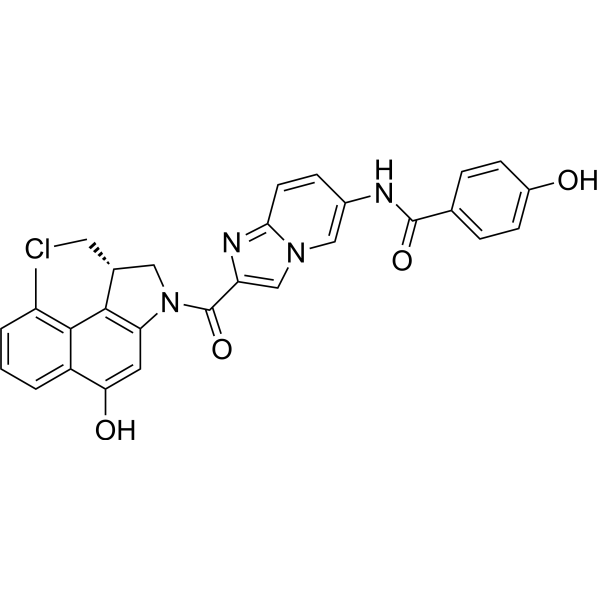 0 ImagesSeco-DUBA hydrochloride is a DNA-targeting cytotoxic agent. Seco-DUBA hydrochloride binds to the minor groove of A-T-rich DNA regions, alkylates the adenine N3 residue, and undergoes spontaneous spirocyclization to generate active DUBA (HY-160969). Seco-DUBA hydrochloride exerts cytotoxic activity against human cancer cells. The reduced hydrophobicity of Seco-DUBA hydrochloride supports the development of antibody-drug conjugates.
-
SEC inhibitor KL-2
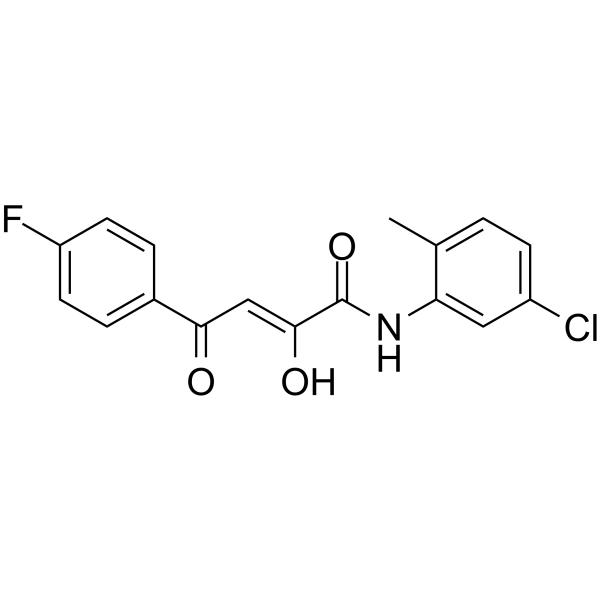 0 ImagesSynonyms: KL-2SEC inhibitor KL-2 (KL-2), a peptidomimetic lead compound, is a potent, selective super elongation complex (SEC) inhibitor and disrupts the interaction between the SEC scaffolding protein AFF4 and P-TEFb, resulting in impaired release of Pol II from promoter-proximal pause sites and a reduced average rate of processive transcription elongation. SEC inhibitor KL-2 exhibits an dose-dependent inhibitory effect on AFF4-CCNT1 interaction with a Ki of 1.50 μM.
-
L67
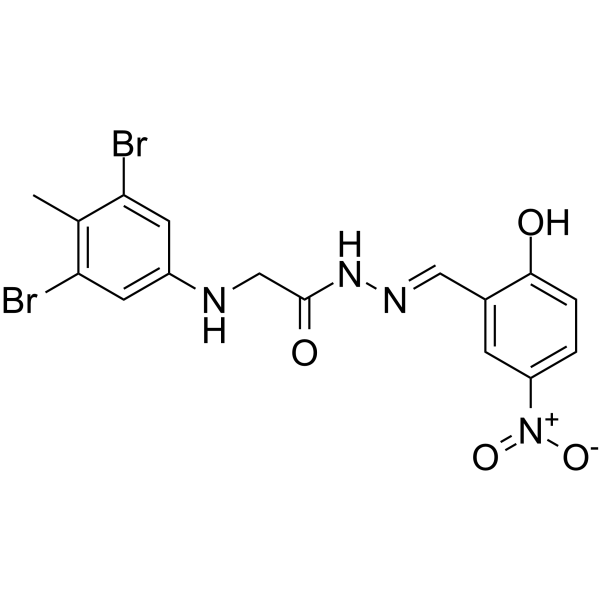 0 ImagesSynonyms: DNA Ligase InhibitorL67 (DNA Ligase Inhibitor) is a competitive DNA ligase inhibitor that effectively inhibits DNA ligases I/III (both IC50 are 10 μM). L67 can cause nuclear DNA damage by reducing levels of mitochondrial DNA and increasing levels of mitochondrially-generated ROS. L67 also activates the Caspase 1-dependent apoptosis pathway in cancer cells, can be used in cancer research.
-
6-(Dimethylamino)purine
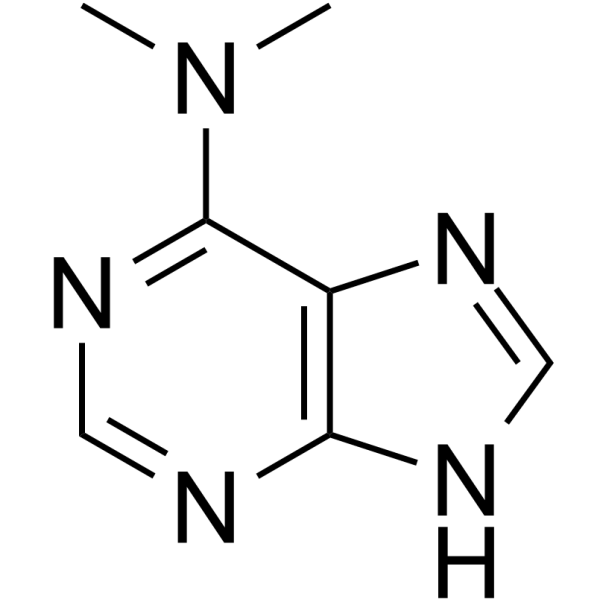 0 ImagesSynonyms: 6-Dimethylaminopurine; 6-DMAP6-(Dimethylamino) purine (6-Dimethylaminopurine) is a serine threonine protein kinase inhibitor. 6-(Dimethylamino) purine can inhibit prolactin induced expression of lactoprotein genes in rabbit mammary gland cells. 6-(Dimethylamino) purine can affect the maturation of mammalian oocytes. 6-(Dimethylamino) purine can lead to downregulation of genes related to cell proliferation and cell cycle progression, such as proliferating cell nuclear antigen, insulin-like gene 1, and serine protease inhibitor 2 genes, and induce apoptosis in lymphoma cells (apoptosis).
-
Xanthosine 5'-monophosphate sodium salt
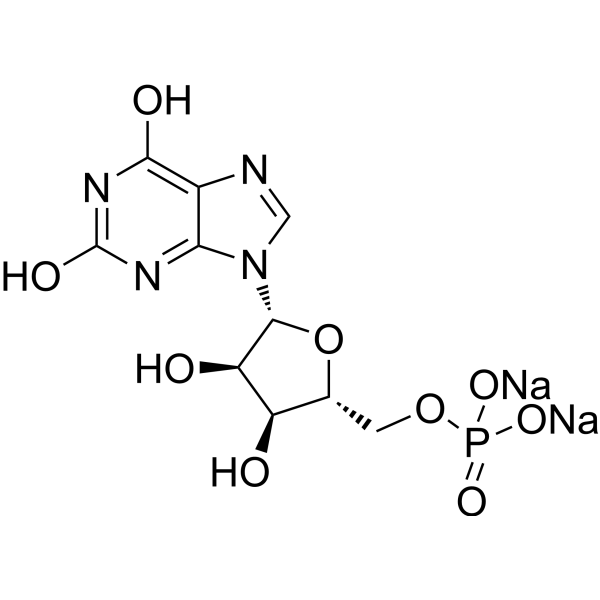 0 ImagesSynonyms: 5'-Xanthylic acid sodium saltXanthosine 5'-monophosphate sodium salt (5'-Xanthylic acid sodium salt) is an intermediate in purine metabolism. Xanthosine 5'-monophosphate sodium salt can be used for genetic code, nucleic acid structure, and DNA, RNA and protein synthesis research.
-
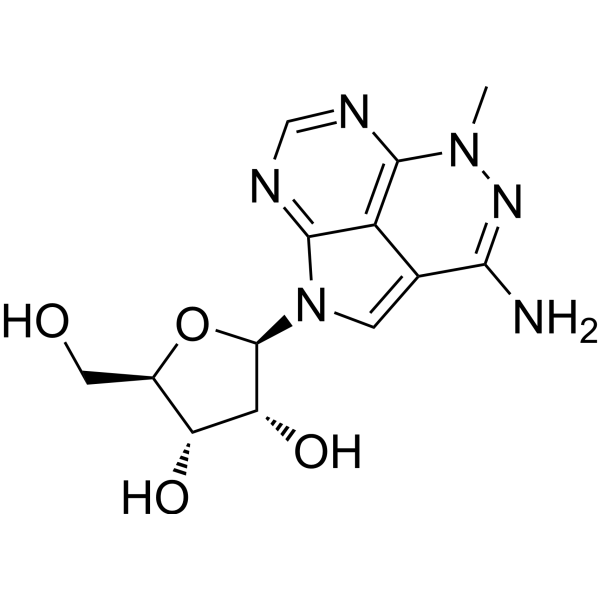
GS-443902 trisodium
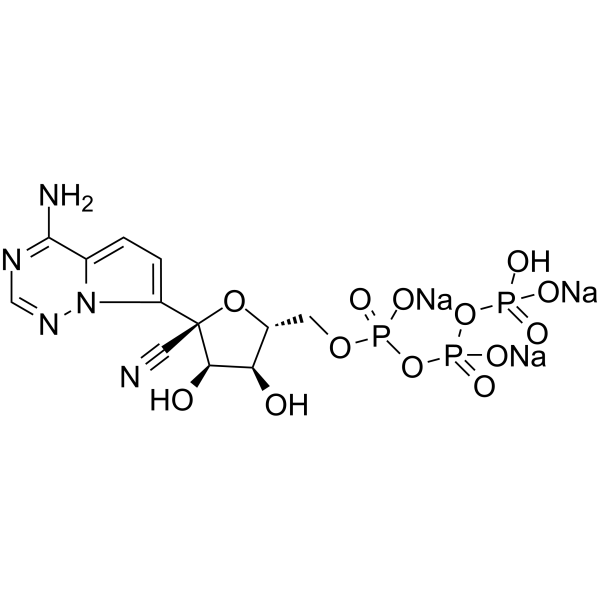 0 ImagesSynonyms: GS-441524 triphosphate trisodium; Remdesivir metabolite trisodium
-
SCR130
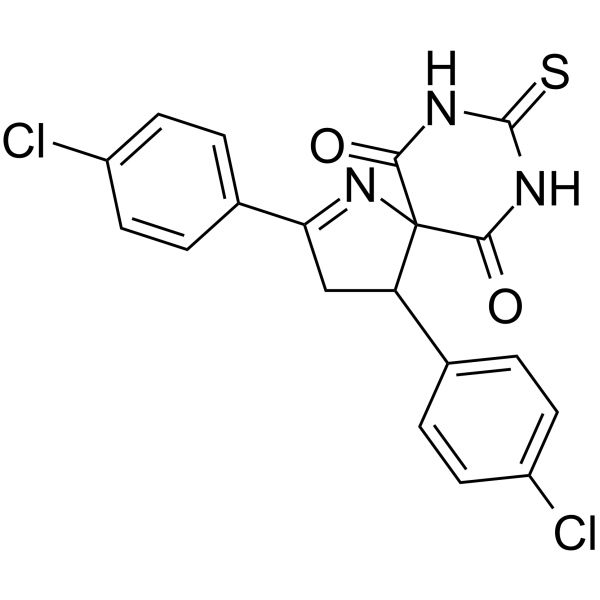 0 ImagesSCR130 is a SCR7-based DNA nonhomologous end-joining (NHEJ) inhibitor. SCR130 inhibits the end-joining of DNA in a Ligase IV-dependent manner. SCR130 is specific to Ligase IV, and shows minimal or no effect on Ligase III and Ligase I mediated joining. SCR130 induces cell apoptosis and has anticancer activity.
-
NSC 617145
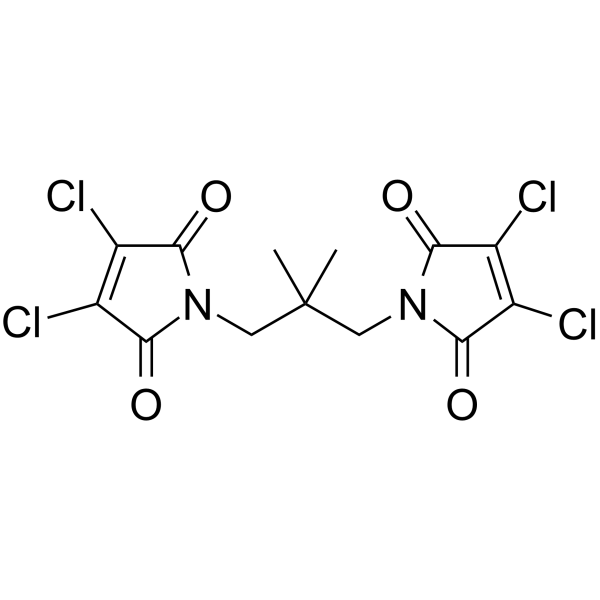 0 ImagesNSC 617145 is a selective werner syndrome helicase (WRN) helicase inhibitor with an IC50 value of 230 nM. NSC 617145 inhibits WRN ATPase, and induces double-strand breaks (DSB) and chromosomal abnormalities. NSC 617145 shows selective for WRN over BLM, FANCJ, ChlR1, RecQ, and UvrD helicases.




